
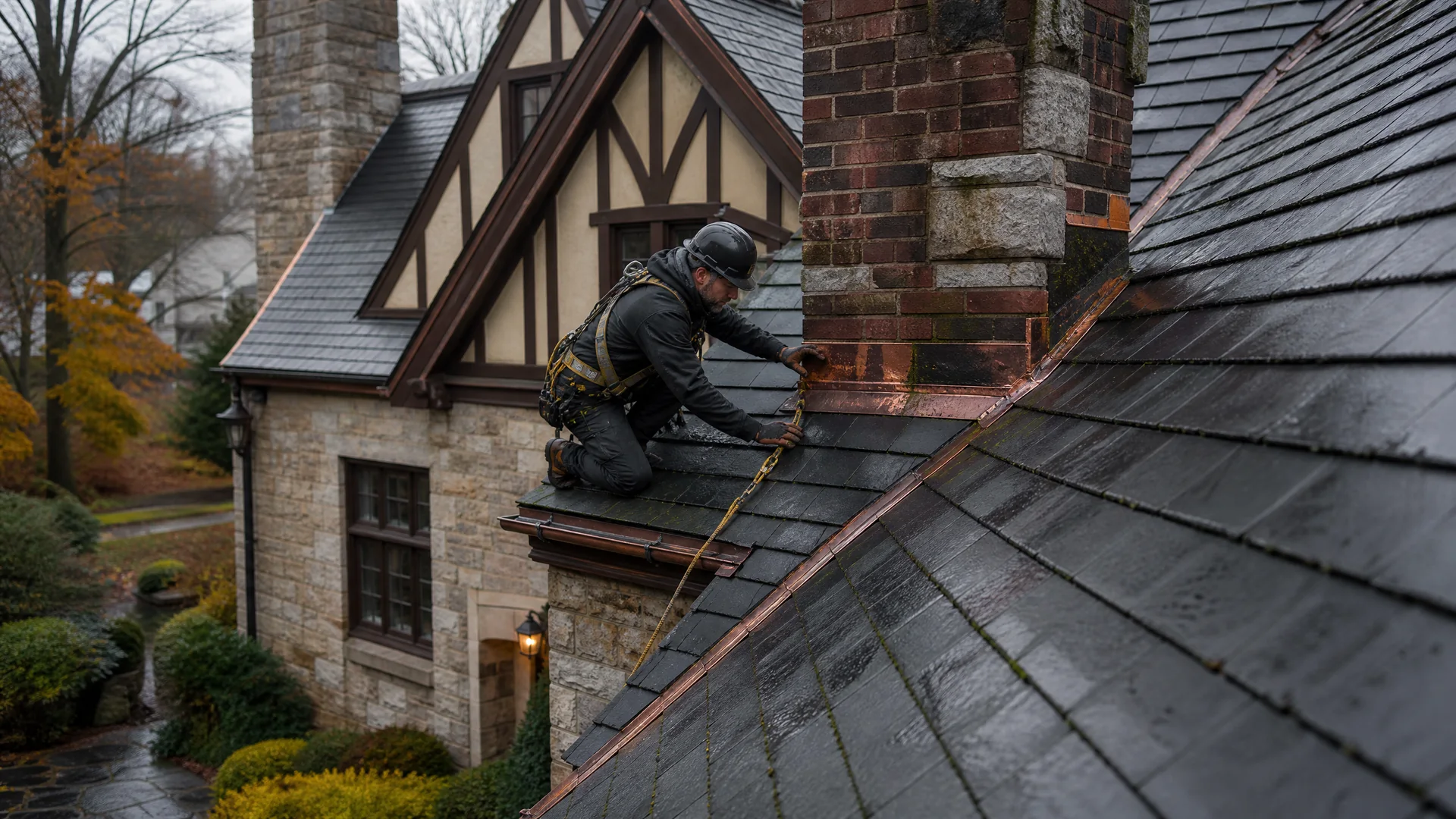
If you have ever looked at a ceiling stain and assumed the leak must be directly above it, you are not alone. It is a common assumption, and often a misleading one.
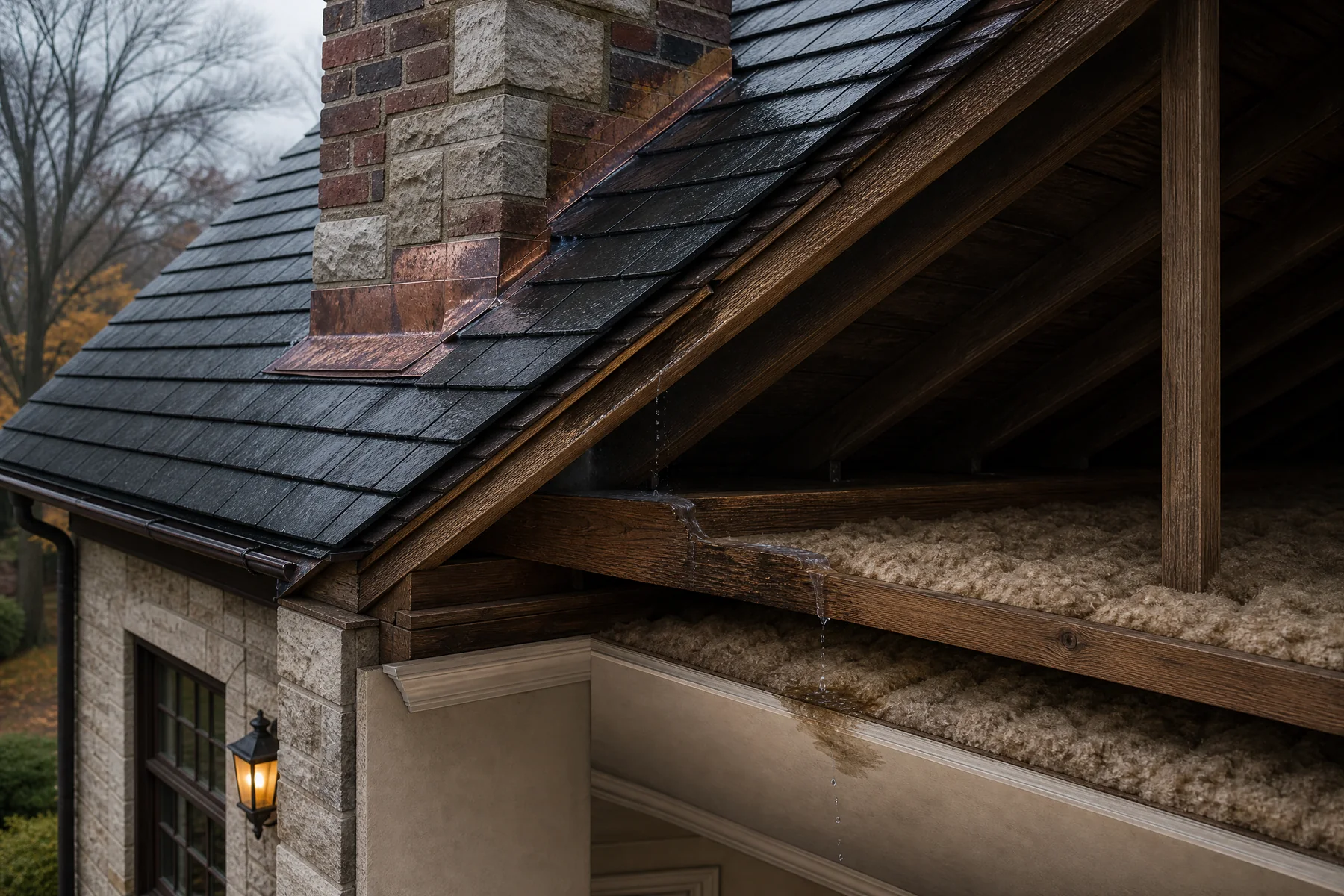
In real roof systems, water rarely follows a clean vertical line. It may enter at one detail, follow the underside of decking, move beside a rafter, collect on insulation, and appear several feet away. A stain in one room can be connected to a flashing or drainage problem in another part of the roof.
That is why responsible roof leak repair begins with diagnosis. The visible symptom is the end of the story. The entry point may be at a chimney, roof valley, skylight, wall transition, gutter edge, or a previous repair that never addressed the cause.
A leak stain is an endpoint, not a map. It shows where moisture reached a visible surface, not the complete route it took through the building.
Why water rarely travels in a straight line
A roof leak involves two separate questions: where did water enter, and what allowed it to travel from there? Once moisture reaches the roof assembly, gravity is only one influence. Roof slope, laps in underlayment, deck joints, nails, framing, insulation, and interior finishes can all redirect it.
Water may cling to the underside of a surface before dropping. It can run along a rafter or truss, collect at a low point, or pass into a wall cavity. In a finished attic, insulation can absorb and redistribute moisture before the ceiling below shows a mark.
This is especially common in older homes with additions, dormers, chimneys, intersecting roof planes, or repairs from different periods. Each transition changes how water can move. Complex roofs are not automatically defective, but they require a methodical inspection of the relationships between materials.
Why the ceiling stain can be misleading
A water stain identifies the place where moisture finally reached a visible finish. For example, water can enter beside a chimney, follow the underside of the deck, reach a framing intersection, and then drip into a hallway or upper wall corner. The room below may not sit directly under the original opening.
This is one reason do-it-yourself patching often disappoints. Sealing the area above the stain may leave the actual entry point untouched. It can also move the visible symptom without stopping the water. A focused repair is valuable when it addresses the real failure, not simply the easiest surface to reach.
Why this pattern is common in Northern New Jersey
Teaneck and Bergen County properties experience seasonal rain, wind-driven weather, snow, ice, and repeated temperature changes. A detail that remains dry in light rain may admit water when wind changes the direction of runoff. Snow and ice can slow drainage. Freeze and thaw cycles can expose small separations at aging sealants, mortar joints, flashings, and fasteners.
Local housing also includes older homes with steep rooflines, masonry chimneys, dormers, additions, and roofing assemblies that have been repaired or altered over time. These conditions make pattern recognition useful, but they do not justify guessing. The building still needs to be read as it exists today.
For slate, tile, copper, and older architectural systems, the inspection method must respect the material as well as the leak symptom. Our specialty roofing work looks closely at individual units, flashings, valleys, fasteners, and compatibility before recommending intervention.
A roof leak is not always a roof-covering problem
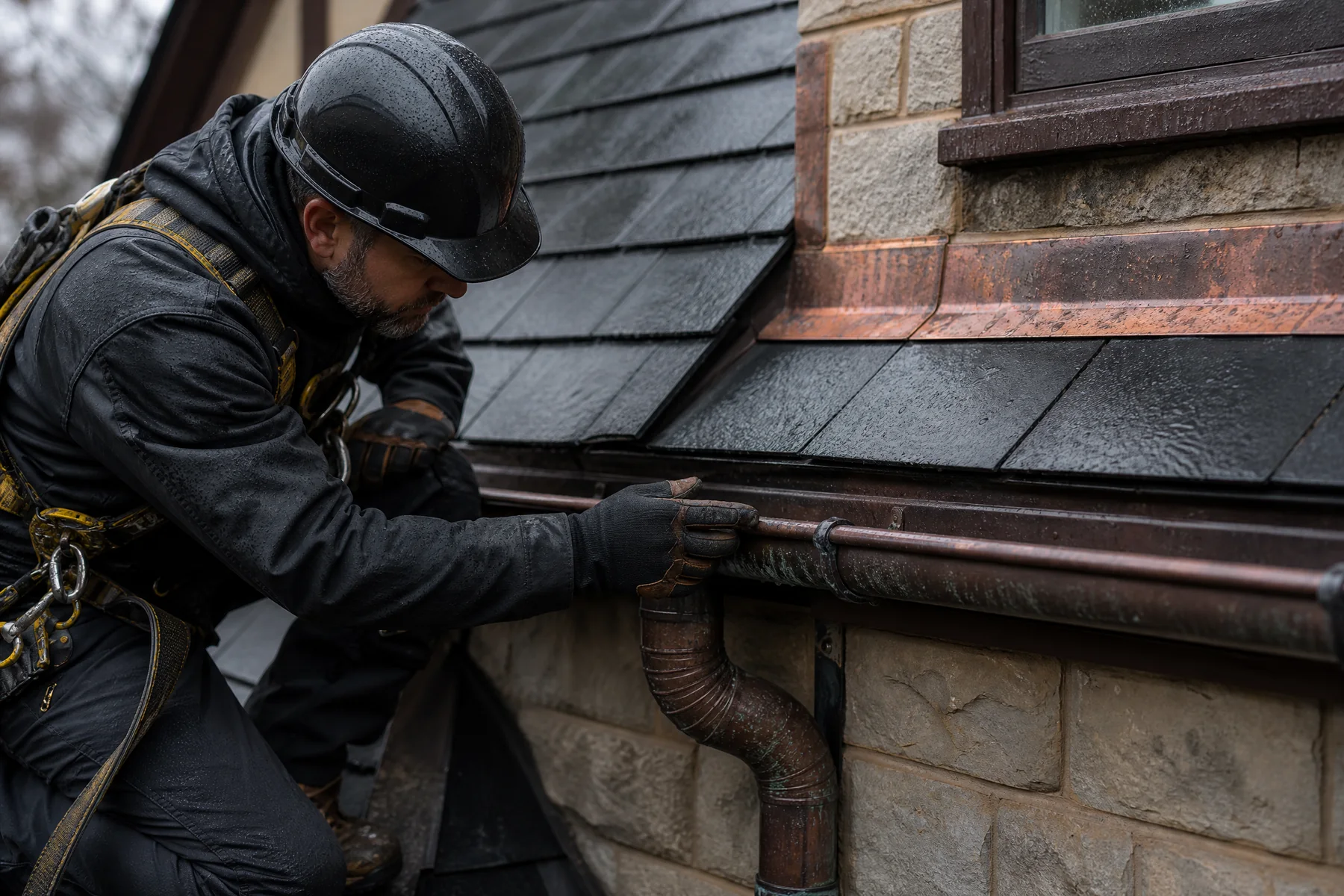
Water intrusion can be connected to failed flashing, open masonry joints, siding transitions, deteriorated sealant, gutter overflow, or poorly managed runoff. On a low-slope or commercial property, the source may involve a parapet, membrane transition, roof drain, scupper, equipment curb, or penetration.
That is why a useful inspection does not stop at the most obvious shingle or membrane. It considers how the roof meets walls, masonry, windows, mechanical elements, and drainage. The question is not only whether a material looks worn. The question is whether the connected assembly can move water out of the building.
Property managers and building owners can review our commercial roofing approach for more detail on occupied properties, access, low-slope systems, and operational planning.
Why evidence-based diagnosis saves time and money
When a leak is misdiagnosed, the property owner may pay once for a repair that does not address the source and again for the work that finally does. Repeated patching also makes the history harder to read because new sealants and surface materials can hide the original relationship.
A disciplined diagnostic process narrows that risk. The inspection should compare the interior symptom with roof geometry, likely entry points, material condition, transitions, and drainage. Photographs and a written scope should explain what was observed and why the proposed work addresses it.
Some leaks call for focused roof repair. Others reveal a broader condition that changes the responsible scope. The purpose of diagnosis is not to make every project larger. It is to make the recommendation more precise.
Document the interior symptom and the weather pattern connected to it.
Compare roof planes, transitions, penetrations, masonry, and drainage.
Write the repair or replacement scope around the supported cause.
Signs it is time to schedule an inspection
You do not need to wait for active dripping. Moisture often becomes visible gradually, and recurring symptoms can affect insulation, framing, interior finishes, and nearby materials while the source remains unresolved.
- A ceiling stain that darkens after rain
- Bubbling paint, softened drywall, or peeling finishes
- A musty odor in an attic or upper floor
- Water appearing around a chimney, skylight, or wall line
- Drips that occur mainly during wind-driven rain
- Repeated moisture in the same general area
- Gutter overflow near the affected room or wall
- New moisture after snow, ice, or a freeze and thaw cycle
If the symptom is active, note when it appears, which direction the weather came from, whether gutters were overflowing, and whether snow or ice was present. Those observations can help focus the first conversation, but they do not replace a roof-level assessment.
Teaneck Roofing serves Teaneck and the broader Northern New Jersey territory described on our service areas page. If you are uncertain whether an address is within the current service area, the team can confirm it directly.
The value of local pattern recognition
Leak diagnosis combines technical knowledge with familiarity. A contractor who understands older Teaneck housing, steep roof forms, masonry details, additions, and local weather patterns may know where to look first. That experience should guide the inspection, not replace it.
Whether the roof uses asphalt shingles, low-slope membrane, slate, copper, or several systems together, the goal remains the same: find the supported source and recommend the right next step. Our broader roofing services and roofing FAQ provide additional context for repair, replacement, and planning decisions.
Final field note
A stain is a clue, not a conclusion.
The place where water appears is often only where the problem becomes visible. The entry point may be higher, farther away, or hidden at a transition that cannot be evaluated from the room below.
A careful inspection can separate a reasonable repair from another guess. If you are seeing water intrusion in Teaneck or Northern New Jersey, Teaneck Roofing can document the condition, trace the likely path, and explain the next responsible step.
Request a roof inspection