
Core roofing · Low-slope systems
Low-slope roofs demand disciplined water management.
Flat and low-slope roofs rely on continuous membranes and precise drainage to manage water. When seams separate, penetrations loosen, or transitions fail, moisture enters the assembly. We examine the surface, trace ponding clues, and diagnose underlying issues to recommend responsible repair or replacement strategies for your building.
Effective flat roof management requires distinguishing between isolated seam failures that can be repaired and widespread membrane degradation that necessitates complete replacement.
Evaluating membranes, seams, and drainage on low-slope structures.
Observing Common Flat and Low-Slope Roof Conditions
Visible symptoms establish where the investigation begins. They do not, by themselves, define the responsible repair or replacement scope.
Ponding Water
Persistent water accumulation alters the membrane surface and adds structural weight. We trace the drainage path to determine if the issue stems from blocked scuppers, inadequate slope, or structural deflection.
Seam Separation
Temperature fluctuations cause membranes to expand and contract, stressing the seams. We observe these critical junctions to identify where adhesives have failed or where mechanical fasteners have backed out.
Penetration Vulnerabilities
HVAC units, vents, and pipes interrupt the continuous membrane. We trace moisture entry points around these penetrations, diagnosing whether the flashing has deteriorated or the sealant has lost its elasticity.
Edge and Transition Wear
The perimeter edge and transitions to parapet walls experience significant wind uplift and movement. We evaluate these zones to detect membrane pulling, flashing detachment, or compromised termination bars.
Assessment before assumption.
Tracing and Diagnosing the Membrane Assembly
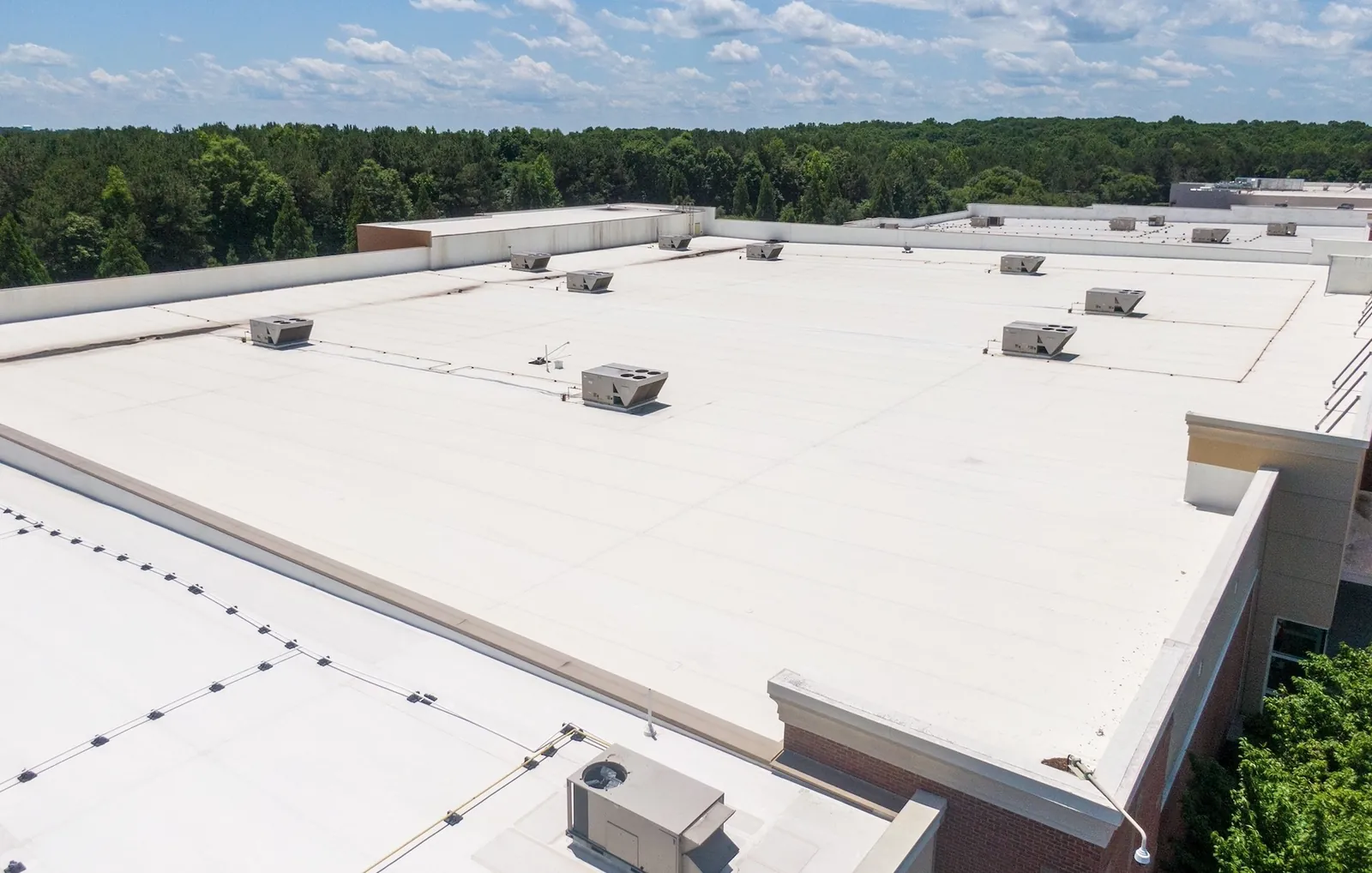
Surface Inspection
We observe the membrane for blistering, alligatoring, or punctures, identifying areas where the material has lost its protective properties.
Drainage Evaluation
We trace the flow of water toward drains, scuppers, and gutters, diagnosing blockages or slope deficiencies that contribute to ponding.
Seam and Flashing Check
We examine the integrity of seams, corners, and base flashings, looking for voids or stress tears that allow moisture infiltration.
Penetration Assessment
We inspect the seals around all roof penetrations, ensuring that pitch pockets, boots, and metal flashings remain securely integrated.
Assembly Condition
Accessible records, visible deformation, prior repair zones, and signs of trapped moisture help determine whether the concern is isolated or extends into insulation and supporting layers.
When membrane damage is localized and the underlying insulation remains dry, targeted repairs can restore watertight integrity. This scope often involves resealing seams, reinforcing penetrations, or applying compatible patches to specific vulnerable zones.
If the membrane has reached the end of its service life or moisture has saturated the insulation, a full replacement becomes the responsible recommendation. This process involves removing compromised materials and installing a new, continuous assembly.
Answers connected to this roof condition.
General guidance helps frame the assessment. The recommendation still depends on the materials, transitions, access and evidence at the property.
Arrange a Comprehensive Flat Roof Assessment
Contact us to arrange a thorough evaluation of your flat or low-slope roof. We will observe the conditions, diagnose underlying issues, and provide a clear recommendation for your property.