
Core roofing · Replacement
Replace the roof when the evidence supports it.
A roof replacement becomes necessary when localized repairs can no longer restore the integrity of the building envelope. This transition involves removing the existing materials to expose the structural decking, allowing for a comprehensive evaluation of the underlying architecture. By addressing hidden vulnerabilities, a new system establishes a reliable defense against ongoing environmental exposure.
We recommend full replacement when systemic material degradation or widespread moisture intrusion renders isolated repairs structurally inadequate and economically inefficient over the long term.
Evaluating the threshold between targeted repair and complete replacement.
Recognizing the structural indicators of systemic roof failure
Visible symptoms establish where the investigation begins. They do not, by themselves, define the responsible repair or replacement scope.
Widespread Shingle Degradation
Extensive loss of protective granules, curling edges, and brittle materials indicate that the primary weathering surface has exhausted its functional lifespan and can no longer shed water effectively.
Persistent Moisture Intrusion
Multiple active leaks across different interior zones suggest that the underlying waterproof membrane and flashing details have failed, allowing water to bypass the exterior defenses.
Sagging Deck Architecture
Visible depressions along the roofline often point to compromised structural decking or saturated insulation, requiring complete removal of the overlying materials to diagnose and correct the underlying weakness.
Chronic Flashing Failure
When metal transitions around chimneys, valleys, and penetrations repeatedly separate or corrode, the resulting water entry can compromise the surrounding structural components, necessitating a comprehensive system overhaul.
Assessment before assumption.
Tracing vulnerabilities through a comprehensive structural evaluation
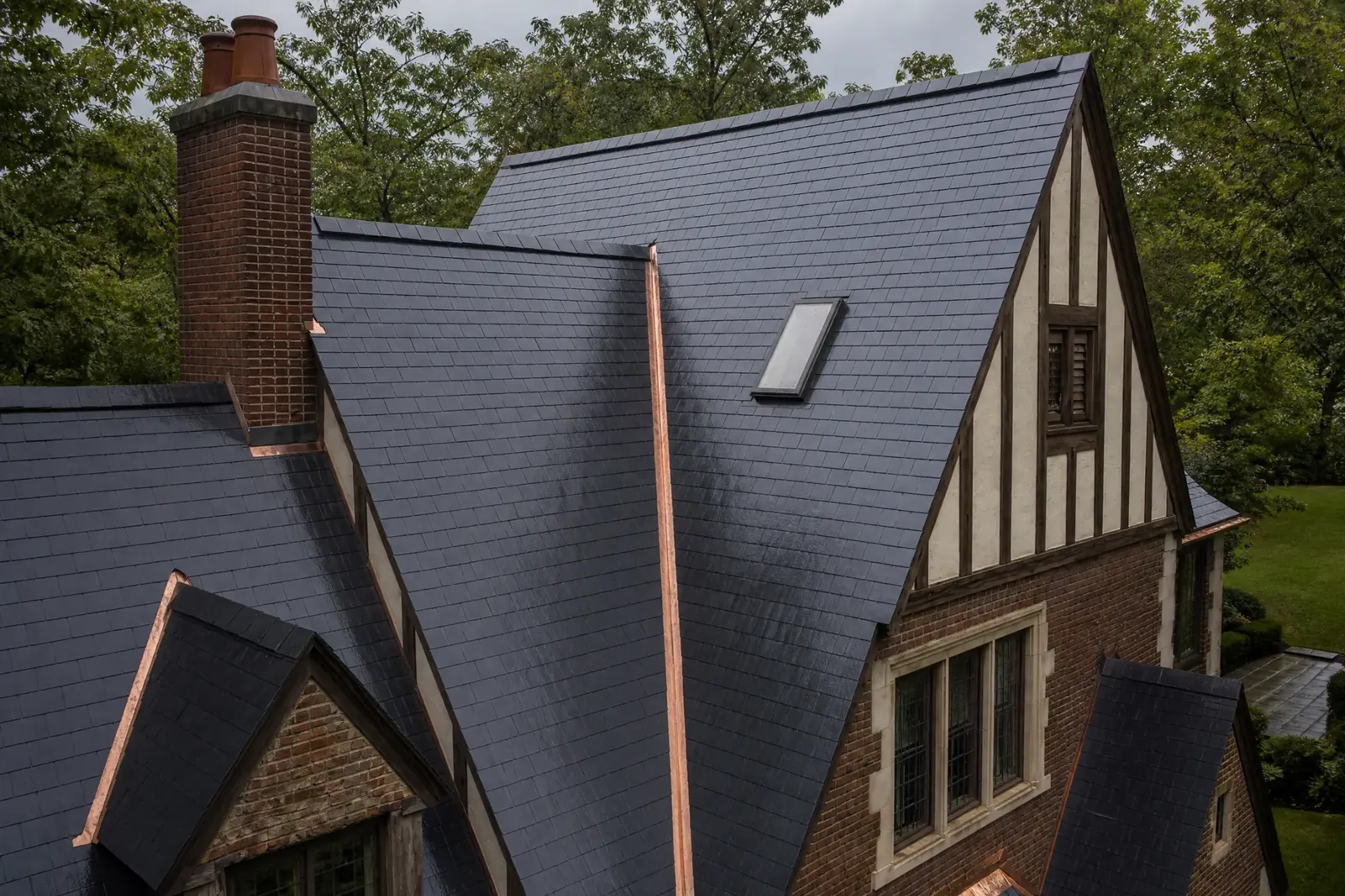
Decking Evidence
Accessible attic observations, visible deflection, moisture patterns, and conditions revealed during tear-off help identify decking areas that require correction before the new system is installed.
Underlayment Planning
The replacement scope identifies the secondary water-management layer and how it integrates with eaves, valleys, penetrations, walls, and other critical transitions.
Ventilation Analysis
Examining intake and exhaust airflow patterns helps determine if the attic space requires improved ventilation to prevent future condensation and premature material degradation.
Flashing Integration
Chimneys, walls, valleys, skylights, vents, and other transitions are reviewed so the new system includes compatible, clearly defined flashing work.
Drainage Assessment
Evaluating the slope and gutter integration ensures that the new roofing system will efficiently channel water away from the building envelope without pooling.
A responsible replacement begins with a complete tear-off of the existing materials down to the structural deck. This exposes hidden vulnerabilities, allowing for the targeted replacement of compromised wood and the installation of a continuous, reliable underlayment that forms the foundation of the new weather barrier.
Integrating proper ventilation, custom flashing, and durable surface materials creates a cohesive architectural defense. By addressing the entire roofing system rather than just the visible exterior, the replacement process establishes long-term structural stability and predictable performance under varying environmental conditions.
Answers connected to this roof condition.
General guidance helps frame the assessment. The recommendation still depends on the materials, transitions, access and evidence at the property.
Schedule a comprehensive evaluation of your roofing system
Initiate a detailed assessment to determine the structural condition of your roof. We will trace existing vulnerabilities and provide a clear, evidence-based recommendation on whether a complete replacement is the appropriate architectural response.